Ingredients
- Sauce:
- 1 cup water
- 2 tablespoons lime juice
- 2 tablespoons white, hulled sesame seeds
- 2 medjool dates, pitted
- 1-1/2 teaspoons freshly grated ginger
- 1 teaspoon yellow curry powder
- 1/2 teaspoon salt-free poultry seasoning
- 1/4 teaspoon red pepper flakes (optional; these are hot)
- Noodles:
- 1 package (8 oz.) soba noodles (see Notes below for other noodle options)
- water to boil noodles
- Vegetables:
- water to sauté
- 1 yellow onion, diced
- 1 tablespoon minced fresh garlic (about 2-3 cloves)
- 3 portabella mushrooms, diced into 1/2-inch squares
- 1 red bell pepper, diced
- 1 cup soy beans (shelled "edamame," found in the freezer section)
- 1 bunch kale (any type, I like curly), cut into bite-size pieces (5-6 cups)
- 1 cup cilantro leaves, roughly chopped (measure then chop)
Instructions
- Place all of the sauce ingredients into a blender and set aside to soak (before blending later). Start a large pot of water to boil for the noodles and cook the noodles according to the package (5 to 10 minutes). Drain, rinsing with cool water. Place the cooked, drained noodles back into their cooking pot and set aside.
- Chop the vegetables and herbs before you start cooking: mushrooms, onion, bell pepper, kale, garlic and cilantro and place into bowls or onto a plate so everything is ready to go.
- Set a large skillet (or another large soup pot) to high heat. Once the pan is hot, add the onions and sauté with a couple tablespoons of water, stirring so as to avoid sticking, 1-2 minutes. Add the garlic, bell pepper, mushrooms, kale and soy beans, and stir. Reduce heat to medium. Place the cover on the pan and let cook for 5-7 minutes, still stirring occasionally. (You can add a little water at this point, but as the mushrooms cook, they will release a lot of liquid, so adding more is usually not necessary.)
- While the vegetables are cooking, blend all of the sauce ingredients that have been soaking, until smooth. Add the sauce to the pot of noodles, along with the sautéed vegetables and cilantro. Stir thoroughly. You don't need to cook it any further at this point; after stirring it all together, it should be warm enough to serve if your noodles were still hot. But if not, heat for a couple more minutes to warm through. Optional: garnish with some sesame seeds, chopped cilantro, or grated nuts.
Notes
Soy beans: If you are avoiding soy, you may substitute frozen peas.
Portabellas: Portabella mushrooms are large capped mushrooms (up to 6 inches in diameter) and also come packaged as "baby portabellas," which are about half the size. For this recipe, use the larger ones.
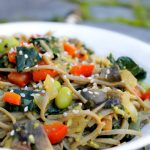
Noodles: There are so many options today for noodles, aside from basic wheat noodles (see below). Often in Asian dishes, soba noodles (made from buckwheat flour, often mixed with another type of flour) are used, or rice noodles. I also like brown rice as well as quinoa noodles, both of which hold up very well after cooking (in the old days they would be kind of sticky and too soft). I have made this dish with soba-wheat noodles (shown in my photos of the dish) as well as quinoa-brown rice noodles, and both were very good. The soba noodles are a bit more delicate and softer, while the quinoa noodles were more robust and springy.
Noodle alternatives: If you are not into noodles, try substituting some peeled and cubed winter squash (butternut, kabocha, delicata) in with the sauted vegetables. Spaghetti squash would also be nice. Aside from squash, try some brown rice, diced potatoes, or broccoli and cauliflower florets.